Posts tonen met het label Myths and Legends. Alle posts tonen

19.3.14

~Lake Taupo Carvings

Lake Taupo is a lake situated in the North Island of New Zealand. With a surface area of 616 square kilometres,
it is the largest lake by surface area in New Zealand,
and the second largest freshwater lake by surface area in geopolitical Oceania after Lake Murray (Papua New Guinea).

On the north west side of Lake Taupo on the cliffs of Mine Bay, there are Māori rock carvings created in the late 1970s
by Matahi Whakataka-Brightwell and John Randall.
Carved in likeness of Ngatoroirangi, a navigator who guided
the Tuwharetoa and Te Arawa tribes to the Taupo area
over a thousand years ago according to Māori legend.

The main carving is over 10 metres high and took
four summers to complete.
The artwork is Matahi's gift to Taupo.
He and four assistants took no payment other than small
change donations from local bar patrons to cover
the cost of the scaffolding.
The 10-metre-high carving is intended to protect Lake Taupo from volcanic activities underneath.
The cliff has become a popular tourist destination
with hundreds of boats and yachts visiting the spot daily.


http://en.wikipedia.org/wiki/Lake_Taupo

19.11.12

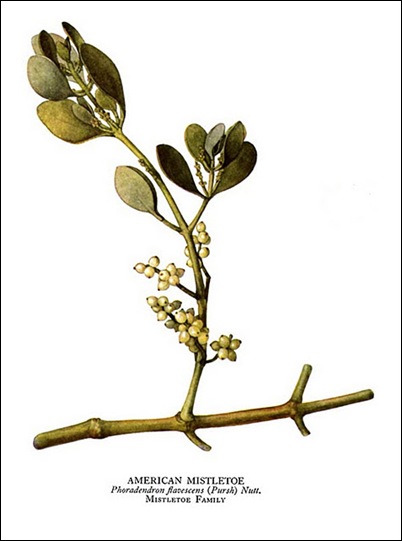
~Mistletoe

Most people have heard of mistletoe,
particularly at Christmas time.
It is a plant which often grows on other trees
and shrubs. The white berries are full of a sticky juice. 
 mistletoe 
There are lots of legends and traditions surrounding
mistletoe, the most well known and popular being the
kissing one. It was believed that kissing under
the mistletoe would lead to marriage.

mistltoe

In ancient times the Druids believed that mistletoe
would bring good luck and health.
Although it has been used to treat some ailments,
the berries are in fact poisonous and should not be
touched by children. Mistletoe has also been
associated with fertility, a good crop being a
sign that the following season's harvest
would be a good one. mistletoe

17.7.12

~Tiny Dragon

littledragon 
Researchers in Indonesia have discovered
what looks like a teeny tiny dragon.
They show an amazing species of gliding lizard
which basically looks like a miniature dragon.

This was a nesting female found in the
Lambsuango Forest reserve in 2009 and
was immediately released after this photograph was taken.

This is thought to be a new species with the
genus but further study will be required to confirm that.

tiny-dragon-lizard-indonesia

Source

18.6.12

~The Brook Horse

the brook horseArt by Theodor Kittelsen. 

Bäckahästen or bækhesten 
(translated as the brook horse)
is a mythological horse in Scandinavian folklore.
It has a close parallel in the Scottish kelpie.

It was often described as a majestic white horse
that would appear near rivers, particularly during
foggy weather. Anyone who climbed onto its back
would not be able to get off again.
The horse would then jump into the river,
drowning the rider.
The brook horse could also be harnessed and
made to plough, either because it was trying to
trick a person or because the person
had tricked the horse into it. 

The_Brook_Horse_by_B_Dub33Art by *B-Dub33
 

A long time ago, there was a girl who was not only pretty but also big and strong. She worked as a maid on a farm by Lake Hjärtasjön in southern Nerike.
She was ploughing with the farm's horse on one
of the fields by the lake. It was springtime
and beautiful weather.
The birds chirped and the wagtails flitted in
the tracks of the girl and the horse in order to pick worms. All of a sudden, a horse appeared out of the lake.
It was big and beautiful, bright in colour and
with large spots on the sides. The horse had
a beautiful mane which fluttered in the wind
and a tail that trailed on the ground.
The horse pranced for the girl to show her how
beautiful he was. The girl, however, knew that it
was the brook horse and ignored it.
Then the brook horse came closer and closer
and finally he was so close that he could bite the
farm horse in the mane.
The girl hit the brook horse with the bridle
and cried: "Disappear you scoundrel, or you'll
have to plough so you'll never forget it."
As soon as she had said this, the brook horse
had changed places with the farm horse,
and the brook horse started ploughing the field
with such speed that soil and stones whirled
in its wake, and the girl hung like a mitten from
the plough. Faster than the cock crows seven times,
the ploughing was finished and the brook horse
headed for the lake, dragging both the plough and the girl. But the girl had a piece of steel in her pocket,
and she made the sign of the cross.
Immediately she fell down on the ground,
and she saw the brook horse disappear into the
lake with the plough. She heard a frustrated neighing
when the brook horse understood that his trick had failed. Until this day, a deep track can be seen in the field. (Hellström 1985:16)
~Source~

16.6.12

~Fairy Ring

fairy ring1

A fairy ring, also known as fairy circle,
elf circle, elf ring, or pixie ring, is a naturally
occurring ring or arc of mushrooms.
The rings may grow to over 10 metres (33 ft)
in diameter, and they become stable over time
as the fungus grows and seeks food underground.
They are found mainly in forested areas,
but also appear in grasslands or rangelands.
Fairy rings are detectable by sporocarps in rings
or arcs, as well as by a necrotic zone (dead grass),
or a ring of dark green grass.
If these manifestations are visible a fairy fungus
mycelium is likely to be present in the ring
or arc underneath.

Fairy rings also occupy a prominent place in
European folklore as the location of gateways into
elfin kingdoms, or places where elves gather and dance. According to the folklore, a fairy ring appears
when a fairy, pixie, or elf appears.
It will disappear without trace in less than five days,
but if an observer waits for the elf to return to
the ring, he may be able to capture it.
~Source~

fairy ring

3.4.12

Starhawk
The word “Witch” carries so many negative
connotations that many people wonder  why
we use the word at all.
Yet to reclaim the word “Witch” is to reclaim
our right, as women, to be powerful;
as men, to know the feminine within as divine.

 ~Starhawk

29.3.12

Maiden’s Garland
Maiden’s Garland, Old St. Stephens Church,
Fylingdales, North Yorkshire
(via Memento Mori)

An old English custom that survived until the early
years of the 20th century, a maiden’s garland was
carried at the funeral of a young unmarried girl
and then hung above her pew in the church
until it disintegrated.
The young girl’s friends and family would make
the garland from strips of fabric and ribbons,
sewn onto a hoop of bendy willow bound by
strips of calico, decorated with silk or paper flowers
and rosettes, even bits of birds’ eggs and shells.
A white glove was often placed in the centre.

Maiden’s Garland

The silk and muslin ribbons that make up the
four garlands at Fylingdales were once mostly white
or cream, but also show flashes of colour and
prints, probably taken from best dresses.
Bedraggled by the centuries
(they date to the mid-1800s), they now hang in
a sealed atrium at the back of the church.

20.3.12

Collection of Grotesques Collection of Grotesques Collection of Grotesques, France;
photographer, Joseph Trompette, 19th c.

A.D. White Architectural Photographs,
Cornell University Library

6.3.12

~Mortsafe

How interesting!

This is a grave from the Victorian age
when a fear of zombies and vampires was prevalent.
The cage was intended to trap the undead
just in case the corpse reanimated.

How interesting!

These cages are called mortsafes,
which were to used to prevent body theft;
a significant worry in 19th century UK due to
the demand for bodies for anatomical studies
for medical students.  The Anatomy Act was passed in 1832, allowing medical universities to use unclaimed
bodies as cadavers.  After this the need (or desire)
for these cages diminished.  While the truth may
not be as romantic as vampires breaking out
of their graves, mortsafes are still an intriguing
relic of a time long past.  
Source

mortsafe

11.9.11

~Mermaids

A mermaid is a mythological aquatic creature
with a female human head, arms, and torso and the
tail of a fish. A male version of a mermaid is known
as a "merman" and in general both males and females
are known as "merfolk".
Mermaids are represented in the folklore,
literature and popular culture of
many countries worldwide.

Josephine Wall Art by Josephine Wall

The first known mermaid stories appeared
in Assyria, ca. 1000 BC. The goddess Atargatis,
mother of Assyrian queen Semiramis, loved a mortal
shepherd and unintentionally killed him. Ashamed,
she jumped into a lake to take the form of a fish,
but the waters would not conceal her divine beauty.
Thereafter, she took the form of a mermaid—human
above the waist, fish below—though the earliest
representations of Atargatis showed her as a fish
with a human head and legs, similar to the Babylonian Ea.
The Greeks recognized Atargatis under the name Derketo.
Prior to 546 BC, the Milesian philosopher Anaximander
proposed that mankind had sprung from an aquatic
species of animal. He thought that humans, with their
extended infancy, could not have survived otherwise.
READ MORE HERE!!!

Waterhouse

art by John William Waterhouse

11.1.10

~The Yeti

yeti
De Yeti , Migyur of verschrikkelijke sneeuwman,
een vermeende reusachtige primaat in de Himalaya,
in uiterlijk verwant aan de hypothetische Bigfoot uit
Amerika, wordt door de wetenschap nog steeds als
een mythe beschouwd. Dit is echter niet het geval onder
de lokale bevolking, die er nog steeds echt van
overtuigd is dat hij bestaat.

De Yeti is een typisch onderzoeksobject voor de
cryptozoölogie. Volgens de expeditie waar de
documentaire Yeti: hunt for the wildman uit
voort is gekomen, zijn er sterkere aanwijzingen dat er
iets rondloopt dat de wetenschap nog niet beschreven heeft.

Men heeft op een van de laatste dagen hiervan, een
haar gevonden in een uitgeholde boom die volgens een
koninklijke Migyurjager bewoond zou zijn geweest door
een Migyur. De haar is getest in Engeland op het DNA
van de mens, beren, primaatachtigen en een heleboel
andere dieren die in die gebieden leven,
maar kwam met niets overeen.

~~~~~~~~~~~~~~~~~~~~~~~~~~~~~~~~~~~~~~~~~~

The Yeti or Abominable Snowman is a mythological
creature and an ape-like cryptid said to inhabit the
Himalayan region of Nepal and Tibet.
The names Yeti and Meh-Teh are commonly used by
the people indigenous to the region, and are part of
their history and mythology. Stories of the Yeti first emerged
as a facet of Western popular culture in the 19th century.

The scientific community largely regards the Yeti as a
legend, given the lack of evidence, yet it remains one
of the most famous creatures of cryptozoology.
The Yeti may be considered a sort of parallel to the
Bigfoot legend of North America.

yeti

Similar alleged creatures:
Gelijksoortige schepsels:

Almas – Mongolia
Amomongo - Negros, Philippines
Ban-manush – Bangladesh
Barmanou - Afghanistan and Pakistan
Bigfoot - Pacific Northwest
Chuchuna – Siberia
Ear liath – Scotland
Fouke Monster - Fouke, Arkansas
Hibagon – Japan
Isnashi - South America
Mande Barung – India
Momo the Monster - Missouri, Louisiana
Người Rừng – Vietnam
Nuk-luk - Northwest Territories, Canada
Orang Mawas – Malaysia
Orang Pendek - Sumatra, Indonesia
Skunk ape – Florida
Woodwose, medieval Europe
Yeren - Hubei, China
Yowie – Australia

bigfoot

Voor sceptici hebben fenomenen als de
"Verschrikkelijke sneeuwman" (of Yeti) veel last van
het zogenaamde Lourdes-effect. Het probleem,
zowel met de Yeti als met het Monster van Loch Ness,
is dat er méér dan één individu van moet bestaan om
als soort te overleven. Deze fenomenen lijken dan ook
eerder aan de menselijke fantasie ontsproten dan
dat ze zouden stroken met de wetenschappelijke
kennis over evolutie. Hoewel er door de wetenschap
geregeld nieuwe diersoorten worden ontdekt, werden
van de yeti tot heden slechts enkel nep-yeti's ontdekt. '

~ LINK ~

9.12.09

~The Zennor Mermaid

The Zennor mermaid is an ancient Cornish legend
of a Mermaid named Morveren who fell in
love with a local boy, Mathew Trewella
   by Arthur Rackham 
There is a local legend about a mermaid in Zennor.
Matthew Trewhella was a good-looking young man with
a good voice. Each evening Matthew would sing the
closing hymn at the church in Zennor, solo.
A mermaid living in neighbouring Pendour Cove was
enchanted by the music. She dressed in a long dress to
hide her long tail and walked a bit awkwardly to the church.
Initially, she just marvelled at Matthew's singing before
slipping away to return to the sea.
She came every day, and eventually became bolder,
staying longer. It was on one of these visits that
her gaze met Matthew's, and they fell in love.
However, the mermaid knew she had to go back to
the sea or die. As she prepared to leave,
Matthew said "Please do not leave, who are you,
where are you from?".
 zennor by Heather Howe

The mermaid told him that she was a creature from
the sea and that she must go back.
Matthew was so love-struck that he swore he
would follow her wherever she went.
Matthew carried her to the cove and followed her
beneath the waves, never to be seen again.

by John William Waterhouse

It is said that if you sit above Pendour Cove at
sunset on a fine summer evening you might hear
Matthew singing faintly on the breeze.

Mermaid Chairzennor Mermaid

At St. Senara Church in Zennor visitors may see a
carved bench-end over 600 years old showing the mermaid.

7.11.09

~Rowan Jelly

met toestemming gebruikt!Met toestemming; deze prachtige prent 
gemaakt door Frank 

  
*MUM'S ROWAN JELLY

1.5 kg Rowan berries
500g cooking apples (or crab apples)
1.25 litres water
Granulated sugar - amount will depend on volume of juice,
but have a couple of kilos to hand.

Trim all the stalks from berries and rinse them if they
are dusty. Coarsely chop the apples, discarding any
bruised or damaged parts, but don't discard the cores.

Put fruit into a preserving pan with the water.
Simmer gently for about one hour until the fruit is
soft; as it softens stir occasionally and mash everything
down with a wooden spoon to release the pectin.
Ladle softened fruit and juices into a jelly bag and leave
to drip for several hours or overnight.
Resist the temptation to press the pulp through the bag,
as the resulting juice will give a cloudy jelly.
Measure strained juice back into a clean jam pan
and for every 600ml of juice add 450g granulated sugar.
Stir over low heat until all the sugar has dissolved
then turn up the heat.
Bring to the boil and boil rapidly for approximately 10 mins.
Test for set, and then skim any foam off the surface
before potting in small sterilised jars.

Rowan Jelly

5.9.09

~Osage Tribe story~

Sorry, vandaag deze post alleen in het engels,
Ik lukte mij niet zo heel erg goed om dit verhaal 
naar het Nederlands te vertalen.

Wisdom of the Willow Tree.

knotwilg
What is the meaning of life?
Why is it that people grow old and die?
Although he was young, those questions troubled
the mind of Little One. He asked the elders
about them, but their answers did not satisfy him.
At last he knew there was only one thing to do.
He would have to seek the answers in his dreams.

Little One rose early in the morning and prayed
to Wah-Kon-Tah for help. Then he walked away
from the village, across the prairie and toward
the hills. He took nothing with him, no food or water.
He was looking for a place where none of his
people would see him, a place where a vision
could come to him.

Little One walked a long way. Each night he camped
in a different place, hoping that it would be the
right one to give him a dream that could answer
his questions. But no such dream came to him.

At last he came to a hill that rose above the land
like the breast of a turkey. A spring burst from
the rocks near the base of a great elm tree.
It was such a beautiful place that it seemed to
be filled with the power of Wah-Kon-Tah.
Little One sat down by the base of that elm tree
and waited as the sun set. But though he slept,
again no sign was given to him.

When he woke the next morning, he was weak
with hunger. I must go back home, he thought.
He was filled with despair, but his thoughts were
of his parents. He had been gone a long time.
Even though it was expected that a young man
would seek guidance alone in this fashion,
Little One knew they would be worried.
"If I do not return while I still have the
strength to walk," he said, "I will die here
and my family may never find my body."

So Little One began to follow the small stream
that was fed by the spring. It flowed out of
the hills in the direction of his village,
and he trusted it to lead him hime. He walked and
walked until he was not far from his village.
But as he walked along that stream, he stumbled
and fell among the roots of an old willow tree.
Little One clung to the roots of the willow tree.
Although he tried to rise, his legs were too weak.
"Grandfather," he said to the willow tree,
"It is not possible for me to go on."
Then the ancient willow spoke to him.
"Little One," it said, "all the Little Ones always
cling to me for support as they walk along the
great path of life. See the base of my trunk,
which sends forth those roots that hold me
firm in the earth. They are the sign of my old age.
They are darkened and wrinkled with age,
but they are still strong. Their strength comes
from relying on the earth.
When the Little Ones use me as a symbol,
they will not fail to see old age as they
travel along the path of life."

Those words gave strength to Little One's spirit.
He stood again and began to walk.
Soon his own village was in sight, and as he sat
down to rest for a moment in the grass of the prairie,
looking at his village, another vision came to him.
He saw before him the figure of an old man.
The old man was stangely familiar, even though
Little One had never seen him before.
"Look upon me," the old man said. "What do you see?"

"I see an old man whose face is wrinkled
with age," Little One said.
"Look upon me again," the old man said.
Then Little One looked, and as he looked, the
lesson shown him by the willow tree filled his heart.
"I see an aged man in sacred clothing,"
Little One said, "The fluttering down of the
eagle adorns his head. I see you, my grandfather.
I see an aged man with the stem of the pipe between
his lips. I see you, my grandfather.
Your are firm and rooted to the earth like the
ancient willow. I see you standing among the
days that are peaceful and beautiful.
I see you, my grandfather. I see you standing
as you will stand in your lodge, my grandfather."

The ancient man smiled. Little One had seen truly.
"My young brother," the old man said,
"your mind is fixed upon the days that are
peaceful and beautiful." And then he was gone.
Now Little One's heart was filled with peace,
and as he walked into the village, his mind
was troubled no longer with those questions
about the meaning of life.
For he knew that the old man he had seen
was himself. The ancient man was Little One
as he would be when he became an elder,
filled with that great peace and wisdom
which would give strength to all of the people.

From that day on, Little One began to spend
more time listening to the words his elders spoke,
and of all the young men in the village,
he was the happiest and the most content.

Recourse:
http://tweedsblues.net/theparables/main.html

4.6.09

~Are they really legends?~

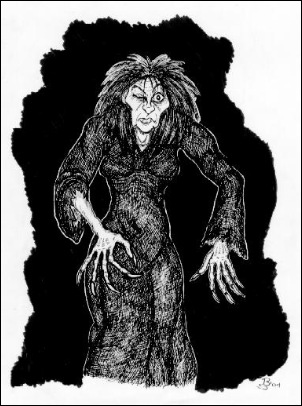
hagsThe Hag: Bad to the Bone - and Ugly Too!

The Hag of the mist is a spirit being in Welsh folklore,
comparable to the Irish banshee.
Like the banshee, the Hag of the mist is portrayed
as an ugly woman, whose wailing cry is said to forewarn
of a death in the household.

It is known in Welsh as Gwrach-y-Rhibyn,
and also goes by the English name of Hag of the Dribble.
Normally invisible, it stalks its victim and can be
seen and heard when near a crossroads or stream.
It is associated with water, and lives in fog bound areas.

She has been described as hideous, with filthy hair,
dark eyes, and wearing ragged black clothing.
Her cry warns of a death, calling out the name
of the victim. The person is usually either
the person hearing it, or someone in their family. 
 Annis hag Terraxia, Half-Earth Elemental/Half-Annis

The largest and strongest of the hags, the annis is a
demon in physical combat. When her natural abilities
are enhanced with the strength of the earth,
she becomes nearly unbeatable in melee.

In her normal form, Terraxia looks like an 8-foot-tall,
elderly woman with mottled blue skin and
a shock of black hair.
Like most annis hags, she prefers to conceal her identity
for as long as possible, so she often poses as
a friendly stone giant traveler.
After lulling her hapless victims into a false sense
of security, she uses fog cloud to obscure their vision,
then rips into them with her claws.
Her Blind-Fight feat usually gives her a considerable
edge in melee combat.

green hag Vyrdahlia, Half-Fire Elemental/Half-Green Hag

Smaller and less physically powerful than the annis,
the green hag is nevertheless a dangerous opponent
with a wide range of special abilities.
When her natural advantages are combined with
the destructive power of fire, she is like a force
of nature fueled by sheer hatred.

Vyrdahlia typically poses as a female human druid,
disguising her sickly green complexion and tangled
scarlet hair with magic. To reinforce this image,
she keeps a Large viper around -- mostly for show,
though the animal is trained to defend her if necessary.
If enemies are near, Vyrdahlia turns invisible
to watch them. Before engaging opponents,
she typically uses ghost sound and dancing lights to
confuse them and wall of fire to divide them.
Then she uses produce flame to lob fiery missiles
from a safe distance.
(With enough dancing lights effects around,
foes aren't likely to spot the flames burning in her hand.)
She also frequently employs hit-and-run tactics,
delivering a Strength-damaging touch attack,
then turning invisible to flee.
  SeaHag uit de serie 'Charmed'The Sea Hag

The Sea Hag is a hag-like being who can
control water. She is a very interesting evil specimen
who can trap her victims in columns of water,
and has control over the environment, allowing her
to cause rainstorms, hurricanes, and even tidal waves.
She is a trickster, for she usually tricks mermaids who
have grown tired of the sea and their immortality by
offering them legs, so they can enter the
mortal world; but at a price.
Should the mermaid fail to find true love with
a mortal within one month,
the Sea Hag takes her immortality.

seahag

Trillobia, Half-Water Elemental/Half-Sea Hag

The sea hag is simultaneously the weakest and the
deadliest of the hags. Though it is the least physically
dangerous, its evil eye and horrific appearance are
extraordinarily powerful weapons.
Unlike the typical sea hag, Trillobia enjoys spending
time among humans, and she often hunts for prey in
port towns and similar locations. She particularly enjoys
posing as a lady of the evening so that she can lure
greedy sailors to their doom. She enjoys allowing
them to see her true form -- complete with oozing,
yellow flesh and filthy, blue-green hair --
just before unleashing her evil eye.
If facing a competent foe, she uses obscuring mist
and fog cloud to conceal her escape.

3.6.09

~Old Girl~

~Elder Mother~Arthur Rackham

"Old girl, give me some of thy wood
and I will give thee some of mine
when I grow into a tree."

The Elder Mother is thought to be the guardian
of the elder trees, and it was said,
until recent time in various parts of England and
Scandinavia that to take wood from the elder
tree one would have to ask the elder Mother first,
or else ill luck would befall the woodsman.
this is what the woodsman has to ask the Elder Mother…

~Hyldemoer~Oskar Klever HYLDEMOER:

Elder Mother. That’s elder as in elder tree,
not older or alder.

She is a Tree Spirit who seems nice enough,
provided you respect elder trees.
If you don't, she may take her revenge.
Scandinavian folklore reveals that she particularly dislikes
her trees being chopped down to make cradles and cribs.
If you put a baby to sleep in an elderwood cradle,
Hyldemoer will come along and pull at the innocent
babe's legs until it shrieks.

The Elder Mother is an elder-guarding being
in English and Scandinavian folklore known by a variety
of names, such as the Danish Hyldemoer ("Elder-Mother")
and the Lincolnshire names Old Lady and Old Girl.
The Mother Hulda (or Frau Holle) of German folklore
is often seen as a variant on the same folkloric being,
due to her connection with the elder and the
similarity of her name.

31.5.09

~A Selkie~

Artist unknown to meDe legende:
De zeeën rondom de eilanden Orkey en Shetland
zijn het onderkomen van de schone Selkies
die de gedaante van een zeehond hebben.  

Artist unknown to me 
Een vrouwtjes Selkie kan haar zeehondenhuid afleggen
en aan land komen als een beeldschoon meisje.

Artist= Jade N. Bengco

Wanneer een mens deze afgelegde huid in handen
krijgt kan hij de Selkie daardoor dwingen
een goede hoewel wat droefgeestige echtgenote
voor hem te zijn, maar als ze ooit haar huid
terug vindt, keert ze onmiddellijk terug naar zee en
laat ze haar man achter die dan wegkwijnt en sterft. 
De mannelijke Selkies wekken stormen op en
doen schepen kapseizen als wraak op de
blinde slachtpartijen op zeehonden.
 Artist unknown to me

Deze muziek is van Mary Mclaughlin, "Sealwoman/Yundah" 
alle kunst is van “the Deviant Art” website 
wat je kan vinden als je het woord "Selkie" in tikt.