19.8.09

~I Heart Potbelly Pig’s~

WAUW!!! sinds ik begon met deze blog, is dit mijn 100ste post
wat deze keer gaat over 1 van m’n favoriete dieren.
…Het hangbuikzwijntje…
~
WAUW!!! This is my 100th post, sindce I started this blog!
and it’s about one of my favorite animals.
… The little Potbelly pig…

~
tetley pig
Het hangbuikzwijn (Sus scrofa vittatus) is een varken
dat in Vietnam en China, maar tegenwoordig ook in
veel Europese huishoudens, vaak voorkomt.
De eerste Vietnamese hangbuikzwijnen kwamen
in 1866 naar Europa ter gelegenheid van de opening
van de dierentuin in Budapest.
Het is een van de bekendste hobbyvarkensrassen.
Andere namen die wel worden gebruikt zijn
het hangbuikvarken of het minivarken.
~
A Potbelly Pig is a pig from Vietnam and China,
but now also in many European households.
The first Vietnamese hanging belly pigs came
in 1866 to Europe on the occasion of the opening
of a zoo in Budapest.
It is one of the most famous pet pig breeds.
Other names that is used are latches belly mini pig.

Het is een klein varkentje met een gedrongen kop
en met kleine spitse oren. De rug is meestal licht
doorgezakt en het beestje heeft een hangbuik die
vaak de grond raakt (vandaar zijn naam) doordat
de poten tamelijk kort zijn.
De huid is dik en vaak geplooid.
Zijn kleur is zwart, wit, grijs, of combinaties van deze kleuren.
Het hangbuikzwijntje wordt ongeveer 50 tot 60 cm hoog
en bereikt een gewicht van ongeveer 65 kilo.
Ze kunnen tussen de 10 en 15 jaar oud worden.
~
It is a small pig with a compact head
and with small pointed ears. The back is usually slightly
dropped and the beast has a hanging belly that
often the ground (hence its name)
the legs are rather short.
The skin is thick and often folded.
His color is black, white, gray, or combinations of these colors.
  The hanging belly piggy is about 50 to 60 cm high
  and reaches a weight of about 130 pounds.
They life for about 15 years.

Pigs

Een hangbuikzwijn is een omnivoor (alleseter).
Als het van het dier af hangt eet hij zoveel als hij op kan.
Het is dus belangrijk om het dier te voeren met
wat hij nodig heeft.
Een volwassen hangbuikzwijn mag 0,5 tot 2%
van zijn lichaamsgewicht per dag gevoerd worden.
Dat wil zeggen dat een zwijntje van 20 kg 200 tot 400 gr
voer per dag mag krijgen. Een big eerder naar 1%
geneigd worden, dan naar 0,5%.
Een aantal voedermiddelen zijn niet geschikt.
Bijvoorbeeld rauwe aardappel, aardappelschillen,
zoetigheden, friet, gesuikerde dranken en alcohol.
Het is bij wet verboden om vlees te voeren aan
varkens en dus ook aan hangbuikzwijnen. i.v.m.
besmetting en verspreidingsgevaar van o.a. varkenspest
Chocolade is zeer giftig voor varkens.
~
A Potbelly pig is an omnivorous (all eater).
The animal will eat as much as he can if you let them. 
  It is therefore important to feed the animal
with that what he needs.
An adult potbelly may eat from 0.5 to 2%
  of his body weight per day.
This means that a pig of 20 kg from 200 to 400 gr.
  should be eaten per day.

A number of foods are not suitable.
For example, raw potato, potato skins
sweets, chips, sweetened drinks and alcohol
and Chocolate is very toxic to pigs.
  It is forbidden by law to feed them meat 
Related to infection and
spread of risk including swine fever.

big

Varkens hebben vaak last van een te droge huid.
Door de huid regelmatig in te smeren met bijv.
uiercrème en met regelmaat een theelepel plantaardige
olie door het voer te doen kunt u dit verhelpen.
~
varken
Door de grote concentraties varkens in Europa
rond de 14 miljoen stuks.
neemt ook het risico op het verspreiden
van besmettelijke ziekten toe.
Om deze ziekterisico's te beperken zijn er
verschillende wettelijke regels op het gebied
van het houden van varkens:
~
There are a large number of pigs in Europe 
  around 14 million.
therefore there is also the risk of spreading
infectious diseases. For these health risks are
  different legal rules in the field to keep pigs:

big

~De registratieplicht; oorlabels / merken.
~Bestrijding ziekte van Aujeszky; een virusziekte
die ook besmettelijk is voor andere dieren zoals honden,
katten, runderen en schapen en je dient hierom
uw varkentje twee maal per jaar te laten vaccineren. 
~Klinische inspecties;
~Verordening Identificatie en Registratie Varkens;
~Registratie varkensleveringen;
~Hygiëne voorschriften besmettelijke dierziekten;
~Geen keukenafval voeren.
~
~The registration requirement; earlabels / brands.
~Fighting Aujeszky's disease, a viral disease
also contagious to other animals such as
dogs, cats, cattle and sheep, and you should 
  twice a year vaccinated your pig.
~Clinical inspections;
~Regulation Identification and Registration Pigs;
~Registration pig supplies;
~Hygiene rules contagious animal diseases;

~big

Website met verschillende rassen varkens
met illustraties van Charles Stephan:

http://www.gorke.nl/rassen.htm

 hangbuik
So now I know how to take good care of them..
I just have to find me some little farm on the countryside!
…ooh I wish…

pigAll pictures found on internet

18.8.09

~Japanse Sneeuwbal~

I took these pictures in a small village called Heusden.

Ik heb deze foto’s gemaakt toen we een middagje
naar Heusden zijn geweest!

Grown for its white, ball-shaped flowers that bloom
in late spring and attractive green leaves.

Eind april, begin mei bloeit de Japanse sneeuwbal.
De sierlijke, bijna horizontaal gebogen twijgen zijn
dan gesierd met een zee van witte bloemen.

   
De Japanse sneeuwbal (Viburnum plicatum) is er in
een aantal variëteiten. Deze variëteiten verschillen
van elkaar in hoogte en breedte, die de struik kan bereiken.
Een Japanse sneeuwbal kan op vrijwel alle grondsoorten
groeien, maar heeft een voorkeur voor humusrijke grond.
De meeste variëteiten bloeien vanaf eind april tot
zeker in juni, een enkele bloeit tot aan de eerste nachtvorst.
Na de bloei komen er donker gekleurde bessen aan,
die met enkele overgebleven, steriele bloemen
prachtig zijn om te zien.

Viburnum plicatum is a species of Viburnum, native to
eastern Asia, in China, Korea, Japan, and Taiwan

It is a deciduous shrub growing to 3 m tall.
The leaves are opposite, 5–10 cm long and 3–6 cm broad,
simple ovate to oval, with a serrated margin.
The flowers are produced in flat corymbs 5–10 cm diameter, comprising a central cluster of fertile
yellowish-white flowers 5 mm diameter,
surrounded by a ring of showy, sterile
flowers 2–3 cm diameter, which act as a target guide
to pollinating insects. The fruit is an ovoid
blue-black drupe 8–10 mm long.
   

Snoeien:
De Japanse sneeuwbal groeit vrijwel altijd in de
karakteristieke, gelaagde vorm. Op oudere leeftijd kunnen
vanuit de voet scheuten groeien, die dwars door de
gelaagheid heen verticaal omhoog groeien.
Om de karakteristieke gelaagdheid te bewaren worden
deze scheuten in principe verwijderd.
Als er horizontaal gegroeide scheuten moeten worden
vervangen en de bloeirijkheid van oude scheuten is
teruggelopen, worden één of meer van deze
verticaal groeiende scheuten aangehouden.
Deze kan/kunnen oude scheuten vervangen.
Sterk snoeien is niet aan te raden. De hoofdvorm
wordt er gewoonlijk niet beter van. De snoeitijd is in
de zomer direct na de bloei, maar veel snoeiwerk
heeft een Japanse sneeuwbal niet nodig.

17.8.09

~Fan of the Backstreet Boys~

~Music Clip~

Music by the Mediæval Bæbes,
Song title The All For Love Of One. 


Lyrics:
I must go walk the wood so wild
And wander here and there
In dred and deadly fere
For where I trusted I am begeld
And all for love of one

Thus am I banished from my bliss
By craft and false pretence
As one from joy were fledde
As from my leaf day by day I flee
And all for love of one

My bed shall be the greenwood tree
The running stremes my drinke
And acorns be my food
When of your beauty I do think
And all for love of one

15.8.09

~Door het Akkerland~

Dacht je nu werkelijk dat dit een saaie wandeling wordt?
~
Do you really think that this will be a boring walk?

tarwelossen tarwedorsen 
Langs het wandelpad zie je veel tarwe en gerst waar
de combines nu het goudkleurige halmen schuiven
en maaien en dorsen tegelijk want de oogst is
vanaf eind juli aan de gang.
~
Along the trail you will see a lot of wheat and barley,
where now combines the golden stalks slide
and mowing and threshing at the same time as
the harvest from late July has begon.

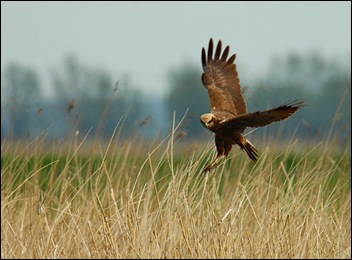
Bruin Kiekendief
Zie je die bruine vogel die laag boven de tarwe aren zweeft
heen en weer wiegt, soms even stil staat in de lucht
de gevingerde wieken ver uitspreid?
Dat is de bruine kiekendief die het akkerland
systematisch afzoekt naar prooi.
~
See that brown bird above the wheat?
flying back and forth, sometimes hangs even still
in the air spreading his wings?
That’s is the brown harrier that systematically 
seeks for prey.
(Circus aeruginosus)

Bruine-Kiek-Woumen1 
Eigenlijk is hij een vogel van rietmoerassen maar
hier nestelt de bruine kiekendief midden in de graanzee
en een veiliger plaats is er eigenlijk niet!
Niemand zal immers het koren platlopen
om z’n nestplaats te bereiken.
~
Here the brown harrier nestles in the middle
of the grain  and there is not a safer place!
Nobody will flat walk the corn
to reach its nest.


Tarweveld
Is het geen prachtig gezicht al dat graan
zover het oog reikt? 
~
Is not a beautiful sigth,
grain as far as the eye can reach?

Koolzaad  
In mei staan hier duizenden hectaren koolzaad in
bloei en verraden nog heel wat meidoorns hun aanwezigheid
door de witte bloesems. In april vormen kilometers
fluitekruid witte schuttingen langs de boerenweggetjes.

Anthriscus_sylvestris fluitekruid 
In May, here are thousands of hectares in rapeseed
flowering and many hawthorn betraye their presence
by the white flowers. In April miles
Cow Parsley (Anthriscus sylvestris) grows as white
fences along the farm roads.

Kwartel
Luister! Tussen de tarwe roept een kwartelhaantje 
die in mei / juni een broedplaats zoekt in
de akkerbouwgebieden. Waarom de kwartelhaantjes
nu nog roepen terwijl het voorjaar allang achter de rug is?
Deze hoenders kunnen nog heel laat tot broeden komen
zelfs in september zijn wel nesten met eieren gevonden.
~
Listen! Between the wheat, raises a quail
they are looking for a breeding areas
in May / June . Why the quail chicken
calls now? While the spring is long behind us?
These birds may come very late to breed
even in September, nests with eggs where found.


Koolzaad

Wat die boer daar zaait? Koolzaad!
Een gewas wat een groeitijd heeft van 11 maanden.
in Augustus worden de ronde zwarte zaadjes
al weer aan de klei toevertrouwd.
Volgende jaar Mei bloeien ze geel en staan hier
tientallen bijenkasten om de akkers.
~
What the farmers are sowing now? Rapseed!
A crop which has a growth time of 11 months.
In August, the round black seeds
already entrusted to the clay ground.
Next year in May they bloom yellow and there
will be dozens hives to the fields.

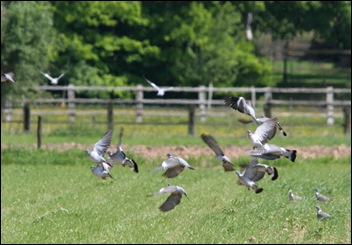
houtduiven 
In juli is het koolzaad rijp dan word geoogst maar de
boer oogst niet alleen ook de houtduiven helpen
hem het barst hier van de koerders.
~
In Juli the rapeseed is harvested ripe,
than the farmers harvest alone.
The Wood-Pigeon likes to help the farmers gladly!

Houtduif
Alles behalve een saaie wandeling toch?
.
De foto´s zijn van internet
het verhaal komt uit het boek
12 maandenwandelen van Harry Wonink
~
Everything except a boring walk, right?
.
Photo´s found on internet
the story is from a book called
`12 maanden wandelen` by Harry Wonink

oogst

14.8.09

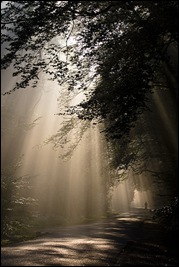
~De Hoge Veluwe~

Gaan jullie weer met mij mee?
Ik leid jullie rond op het Park de Hoge Veluwe
deze tijd van het jaar is het er prachtige wandelen!
(De foto’s zijn niet van mij)
~
Please take a walk with me again?
This time I take you to the Park of ‘de Hoge Veluwe’
and lead you round, would you like that?
It’s a beautiful walk these time of year;
(Pictures are not mine)

hoge_veluwe 
Het Nationaal Park De Hoge Veluwe is een gebied van
55 km² op de Veluwe (1000 km²), het grootste
laaglandnatuurterrein in noordwest Europa.
De Veluwe ligt in de Nederlandse provincie Gelderland.
Het park is grotendeels gelegen in de gemeente Ede.

moeflon met jong 
Het park werd gesticht door het echtpaar Kröller-Müller
dat het ooit als jachtterrein bezat. Ze hadden er onder
andere moeflons uit Corsica en kangoeroes uitgezet.
De moeflons zijn er nog steeds. Begin jaren dertig zat
het echtpaar in financiële problemen. Een poging om het
jachtterrein te verkopen aan Natuurmonumenten mislukte. Uiteindelijk besloot het Rijk om de 800.000,- gulden
te verschaffen die Anton Kröller vroeg.
Het geld werd door het Rijk gedoneerd aan een stichting,
die het park vervolgens van Kröller kocht.
Als tegenprestatie kreeg het Rijk de kunstcollectie van mevrouw Kröller-Müller, op voorwaarde dat er een museum
voor werd gebouwd. De Hoge Veluwe is in bezit van
de stichting die in 1935 werd opgericht, en krijgt
geen subsidie zoals een nationaal park die krijgt.
Bezwaar van deze situatie is dat er hekken en kassa's
nodig zijn om inkomsten te genereren. De hekken
zijn omstreden: ze verstoren de eenheid van de Veluwe
als geheel, mede door de centrale ligging van De Hoge Veluwe.

http://www.hogeveluwe.nl/

1428629938_b53b2f16b2 1428631146_c573d452a1

In het Park leven talloze dieren: enkele honderden
edelherten, reeën en moeflons, tientallen wilde zwijnen
en heel veel kleine dieren. Wie het Nationale Park bezoekt
om in het wild levende dieren te zien, zal in de eerste plaats
denken aan een ontmoeting met groot wild.
De Hoge Veluwe is een natuurpark. Omdat alle dieren zich
in het Park vrij kunnen bewegen, is een toegangskaartje
geen garantiebewijs voor het zien van grofwild.
Toch is de kans op zo'n ontmoeting zeker aanwezig.
De rustige maanden van het jaar bieden de grootste
kans op wildwaarnemingen. Overdag trekt het wild zich
in de dekkingsbosjes terug om te herkauwen of te slapen.
In de late namiddag en avond, wanneer de dieren op zoek
gaan naar voedsel en de dekking verlaten, is de beste
tijd van de dag om wild te zien. Op enkele plaatsen
waar regelmatig wild is te zien, zijn wildobservatieplaatsen ingericht. Ook is er in het centrale- en oostelijk gedeelte
van het Park een redelijk grote kans op het zien van wild.
Hier leven veel edelherten, moeflons,
wilde zwijnen en een aantal reeën.
~
In the Park live countless animals: a few hundreds
of red deer, roe deer and mouflons, dozens of
wild boars and many small animals.
The ‘Hoge Veluwe’ is a national park for wild animals;
visitors usually go there with the intention to meet
some big game. Because all animals in the Park are
free to move, a visit is no warranty for seeing wild animals. However, a meeting is certainly a probability.
The quiet months of the year offer the greatest
chance of wildlife sightings.
During the day the wild move deep in the woods for
cover or sleep.In the late afternoon and evening,
when the animals seek food and leave cover,
is the best time of day to spot them.
In some places with regular wildlife sightings,
observation sites have been created.
There is also in the central and eastern part of the Park
a reasonably good chance of seeing game.

There are many white bicycles wich can be used freely by the visitors!

In het park zijn er 1700 witte fietsen die je 
als bezoeker mag lenen en vrij bewegen door het Park.
Witte Fietsen kunnen niet gereserveerd worden
en mogen niet op slot worden gezet.

Bij een dagje Hoge Veluwe hoort een tochtje
op een Witte Fiets!
~

In the park are 1700 white bicycles that you
as a visitor may borrow freely. White Bicycles can not
be reserved and should not be put on a lock.

When you visit the park you should
take a ride on a white bike!

hoge_veluwe 
Hoge Veluwe National Park is located in the middle
of Holland and measures 5500 acres.
It consists of woodland, heathland, small lakes
and driftsand. Many cycle paths are present as are
some small roads were cars are permitted.

Kroller Muller

In 1964 wordt in de beeldentuin een paviljoen herbouwd
van architect Gerrit Rietveld. Het gebouwtje dat Rietveld
in 1955 ontwierp voor een openluchttentoonstelling in
Arnhem, is speciaal bedoeld voor het buiten
exposeren van beelden. ...MEER INFO... 
~
In the centre of the park resides the Visitors Centre and
the Kröller Müller Museum with adjacent sculpture garden.

Vincent van Gogh

Het Kröller Müller museum heeft een grote collectie
van Vincent van Gogh’s schilderijen!
~
The Kröller Müller Museum has a large
collection of paintings by Vincent van Gogh!

Christiaan de Wet

Monument Christiaan Rudolf de Wet (1854-1922)
Hij was een Zuid-Afrikaans politicus en een Boerengeneraal
tijdens de Tweede Vrijheidsoorlog (1899-1902).
~
On the central plain (dutch mini-plain) general
Christiaan de Wet (1854-1922) stands proudly on his pilar.
This general fought against the British troops in
South Africa during the South African War (1899-1902).

St. Hubertus Hunting Lodge In het noorden van het Park vindt u Jachthuis Sint Hubertus,
gelegen aan een prachtige vijver in een geliefd wandelgebied.
Hier woonde vroeger de Familie Kröller Müller.
Het huis werd ontworpen door H.P. Berlage.
~
The beautiful St. Hubertus Hunting Lodge is the
former home of the Kröller-Müller family.
The lodge was designed in 1914 by H.P. Berlage.

Das.

hoge_veluwe

13.8.09

~Charlotte’s Web~

Charlottes_Web .
Yesterday evening I saw the movie Charlotte’s Web
A movie from 2006 after the book by EB White.
The story is about Wilbur..
A little springpig who would not live to see the snow
than he becomes friends with a spider named Charlotte.
~
Gisteravond heb ik de film Charlotte’s Web gekeken
Een film uit 2006 na het gelijknamige boek van E.B. White 
Het gaat over een in de lente geboren biggetje Wilbur 
Hij zal niet lang genoeg leven om de wintersneeuw te zien.
totdat hij bevriend raakt met Charlotte de spin.
http://enchantedadventures.blogspot.com/
.charlotte  .
De spin (Araneae) is een geleedpotig dier waarvan
ongeveer 50.000 soorten zijn beschreven.
Spinnen komen over vrijwel de hele wereld voor,
maar niet in zee. De kleinste spinnensoorten blijven
enkele millimeters, grotere soorten hebben een
spanwijdte van meer dan 25 centimeter.
Spinnen zijn er in alle vormen en maten,
vooral tropische soorten worden groter en
hebben soms bonte kleuren, markante
lichaamsvormen of doornachtige uitsteeksels.
De meeste soorten hebben echter een goede camouflage.
.
Spiders occur in a large range of sizes.
The smallest, Patu Digua from Borneo,
are less than 0.37 mm in body length. The largest
and heaviest spiders occur among tarantulas,
which can have body lengths up to 90 mm
(about 3.5 inches) and leg spans up to 250 mm
(about 10 inches).
.
Segestria florentina .
Een spinnenweb is een door spinnen gemaakte
constructie bestaande uit spinsel dat dient als
vangnet voor vliegende of springende prooien.
Een spinnenweb is zeer licht maar erg stevig,
de draden zijn zo dun dat ze niet worden opgemerkt
door vliegende insecten. Spinnen die een spinnenweb
maken vangen vooral vliegen en muggen,
lieveheersbeestjes en net- en grootvleugeligen.
De vorm en positie van het web hangt samen met de
prooikeuze van de spin.
.
Spinnenweb.
De spin produceert de draden voor het web zelf,
dit materiaal wordt spinsel genoemd. Deze draad
bestaat uit een mengsel van eiwitten, en de spin
bepaalt afhankelijk van de functie of de draad moet
kleven of niet. Spindraad komt uit de spintepels in
het achterlijf van de spin. Het wordt geproduceerd
door verschillende klieren en elke klier produceert
een bepaald type spinsel.

Meestal zijn de draden van het spinnenweb voorzien
van kleefstof. Als de prooi in het web vliegt blijft
deze aan de webdraden plakken. De spin heeft zelf
weinig last van de kleverige draden. De draden van
het web zijn niet volledig maar met druppels lijm bedekt.
De spin loopt als het ware tussen de lijmdruppels door.
Ook zijn er in een spinnenweb 'loop'draden aanwezig
zonder lijmdruppels; de spin gebruikt deze draden om
zich in het web te verplaatsen zonder in
zijn eigen web te verstrikken.
.Spider_Web

.
Spiders
(order Araneae) are air-breathing chelicerate
arthropods that have eight legs, and chelicerae
modified into fangs that inject venom.
Spiders are found world-wide on every continent
except for Antarctica, and have become established
in nearly every ecological niche with the exception of
air and sea colonization. As of 2008, approximately
50,000 spider species, and 109 families
have been recorded by taxonomists.
.

Spider web


During the process of making an orb web, the spider will
use its own body for measurements.

Many webs span gaps between objects which the spider
could not cross by crawling. This is done by letting out a
first fine adhesive thread to drift on the faintest breeze
across a gap. When it sticks to a suitable surface at the
far end, the spider will carefully walk along it and
strengthen it with a second thread.
This process is repeated until the thread is
strong enough to support the rest of the web.

After strengthening the first thread, the spider will continue
to make a Y-shaped netting. The first three radials
of the web are now constructed. More radials are added,
making sure that the distance between each radial is
small enough to cross. This means that the number of
radials in a web directly depends on the size of
the spider plus the size of the web.
.
Spider web

.
After the radials are complete, the spider will fortify the
center of the web with about five circular threads.
Then a spiral of non-sticky, widely spaced threads are
made for the spider to easily move around its own
web during construction, working from the inside out.
Then, beginning from the outside in, the spider will
methodically replace this spiral with another,
more closely spaced one of adhesive threads.
It will utilize the initial radiating lines as well as the non-sticky
spirals as guide lines. The spaces between each spiral
will be directly proportional to the distance from the tip
of its back legs to its spinners. This is one way the spider
will use its own body as a measuring/spacing device.
While the sticky spirals are formed, the non-adhesive spirals
are removed as there is no need for them anymore.

After the spider has completed its web, it will chew off the
initial three center spiral threads then sit and wait.
If the web is broken without any structural damage
during the construction, the spider does not make
any initial attempts to rectify the problem.
.

.
The spider, after spinning its web, will then wait on or
near the web for a prey animal to become trapped.
The spider senses the impact and struggle of a
prey animal by vibrations transmitted through the web.

Spiders do not usually adhere to their own webs.
However, they are not immune to their own glue.
Some of the strands of the web are sticky, and others are not.
For example, if a spider has chosen to wait along the
outer edges of its web, it may spin a non-sticky prey
or signal line to the web hub to monitor web movement.
Spiders have to be careful to climb only on the
non-sticky strands of their webs.

A spider positioned in the middle of the web makes
for a highly visible prey for birds and other predators,
even without web decorations. Many day-hunting orb-web
spinners reduce this risk by hiding at the edge of the
web with one foot on a signal line from the hub or
by appearing to be inedible or unappetizing.

. All photo’s found on internet!

12.8.09

~Thank you all!

Ik wil jullie hartelijk danken voor al jullie leuke
en lieve reacties telkens weer!
Ik hoop dat ik jullie nog lang kan plezieren
van de mooie verhalen en de prachtige foto’s
van de Flora en Fauna om ons heen!
De Wisteria bloemen (uit mijn ouders tuin)
is voor jullie allemaal als dank…

Afbeelding 045
Thank you all for your sweet and lovely comment's
you are all so kind to visit my blog and enjoyng it!!!
I hope I can please you far with fun stories and beautiful photos
from the Flora and Fauna around us!
These Wisteria flowers (from my parents garden)
are for all of you…
~~~