Posts tonen met het label Nations. Alle posts tonen

19.3.14

~Lake Taupo Carvings

Lake Taupo is a lake situated in the North Island of New Zealand. With a surface area of 616 square kilometres,
it is the largest lake by surface area in New Zealand,
and the second largest freshwater lake by surface area in geopolitical Oceania after Lake Murray (Papua New Guinea).

On the north west side of Lake Taupo on the cliffs of Mine Bay, there are Māori rock carvings created in the late 1970s
by Matahi Whakataka-Brightwell and John Randall.
Carved in likeness of Ngatoroirangi, a navigator who guided
the Tuwharetoa and Te Arawa tribes to the Taupo area
over a thousand years ago according to Māori legend.

The main carving is over 10 metres high and took
four summers to complete.
The artwork is Matahi's gift to Taupo.
He and four assistants took no payment other than small
change donations from local bar patrons to cover
the cost of the scaffolding.
The 10-metre-high carving is intended to protect Lake Taupo from volcanic activities underneath.
The cliff has become a popular tourist destination
with hundreds of boats and yachts visiting the spot daily.


http://en.wikipedia.org/wiki/Lake_Taupo

3.1.13

iron shoes

Iron shoes are pictured on the bank of the Danube
marking the Holocaust in Hungary.
Hundreds of Hungarian Jews had to leave their shoes
on the bank before they were shot into the river
by Hungarian militaimen during the World War II.
The United Nations declared in 2005
the Holocaust Memorial Day
on January 27 to commemorate
the 6 million Jews and other victims
murdered by the Nazis.
~LINK HERE~

3.12.12

~High Himalaya

High Himalaya

For 20 years I trekked this unforgiving region
always with a Lecia in my hand
I remain captivated by the stunning landscapes
and the kindness of the people.”
Eric Valli

High HimalayaHigh Himalaya High Himalaya High Himalaya3High Himalaya

27.1.11

~Gypsy Wagon

I love Gypsy Wagons!!!
I would love if this wagon could decorates my lawn.  

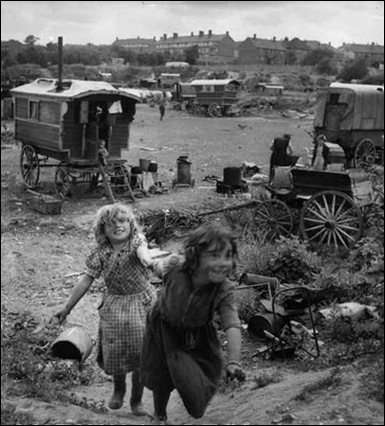
September 1942 1951 Gypsy children   
Gypsies are believed to have originated in India,
and to have gradually migrated to the Near East
and Western Europe, reaching Scotland in the early
sixteenth century. They generally travelled in family groups,
and were associated with professions such as
hawking and pedling, acting as tinkers and street
performers, and most common of all, as fortune-tellers.

gypsy wagon  
In eighteenth-century English accounts Gypsies were
generally lumped together with Irish travellers
and vagrants. But by the nineteenth century a series
of powerful romantic notions about Gypsy life began
to predominate. A new interest in Gypsy "lore"
and in the Romani language can be identified, at the
same time that new efforts were being made to "convert"
Gypsies to a sedentary lifestyle.

housetruck
In the Proceedings Gypsies are usually stereotypically
accused of dishonesty or craftiness and are often
found directing victims to the locations of stolen goods.
From the late eighteenth century onwards, they are also
particularly associated with the crime of "animal theft",
reflecting the particular involvement of Gypsies
in horse dealing. Racial stereotypes are occasionally
employed, with physical descriptions including swarthy
skin and the wearing of ostentatious, colourful clothes.

READ MORE HERE..

  gypsy wagon

“We are all
wanderers
on this earth
our hearts
are full
of wonder
our souls
are deep
with dreams”
-Gypsy Proverb

tiny house
If you are looking for a vacation that is an adventure,
try a Gypsy Caravan vacation. A Gypsy vacation is an
escape from mundane every-day life. Imagine handling
a horse and traveling through a beautiful countryside while
living in a gypsy caravan for a couple of days.
If you vacation in Ireland, the UK, France, Germany,
Hungary, and the Czech Republic
you can find this type of vacation!
..MORE HERE..

gypsy wagon

12.7.10

~The Painted People

1

The beautiful people of the Surma and Mursi tribes
in the L'Omo Valley on the borders of
Ethiopia, Kenya, and Sudan, who were
photographed by Hans Silvester.
Click Here to see more photo’s.

 2

Volkeren van de Omo-vallei ( Ethiopië )
foto's van prachtige lichaamsbeschilderingen
en sprekende portretten.
  4 drinking OLYMPUS DIGITAL CAMERA         silves1

22.2.10

~Gurung People.

Verder naar beneden scrollen voor
Nederlandse tekst!

gurung

Gurung traditional areas are from the eastern part
of Gorkha district through Lamjung District and
Kaski District through Syanja district. Gurungs predominantly practice their ancient Bon religion, which is
Shamanistic and animistic in nature.
Gurungs later came to adopt Tibetan Buddhism.
Some Gurungs of eastern Nepal have also been
influenced by the Hindu religion. The main occupation
of the Gurung people is aggriculture but some breed
animals like sheep.  There are roughly 450,000 Gurungs
in Nepal totaling about 2.43% of the population.

gurung

The Gurungs are also one of the major groups from
Nepal representing Gurkhas, the feared soldiers making
up part of the English and Indian armies.
The Gurkhas are known for their endurance and bravery.
There is a World War II story of a British regiment
leader asking for volunteers for a dangerous mission
to drop from a plane in enemy territory and only about
half of the men came forward.
Once it was explained they were going to use
parachutes, they all volunteered. Today, some of the
wealthier families in the Pokhara area include retired
Gurkha soldiers due mainly to their compensation
from the British government.

Although treated as such by historical Hindu Kings,
the Gurung people do not fall into the Hindu caste
system since the mongoloid societies of Tibet and
China from which the Gurungs came had no caste system
and within themselves the Gurungs
do not practice caste rules.

gurung

Yet for several centuries, at least, the Gurungs and
other hill peoples have been mixing with the caste
cultures of Aryan India and they have been influenced
by them in various ways.

There are more than a hundred family names
( Thars ) known within the Gurung people.

Some of the names are:
Ghyapring and Pachyu (priest),
Ghale, Ghotane and Lamchhane ( which divide into
various sub-groups with different names )

Other major family names are Thimje, Telme,
Lehge, Kromje, Lamme, Eujme, Lohnme,
Lainme, Tohrje, Sarbuja, Mhobje.

gurung girls

Middelgroot en zwaar gebouwd, zo ziet een doorsnee
Gurung eruit. Men vindt ze in de districten Lamjung,
Gorkha, Syangja, Mustang, Manang en Dhading
in de Gandaki Zone. Ze hebben zich daarnaast ook
verspreid over Okhaldhunga, Sankhuwasabha en
Taplejung. Ze leven voornamelijk van de veeteelt.
Gurung hebben een heel oude geschiedenis.
Hun heilige boek is 'Pye-tan-lhu-tan', maar die wordt
met name mondeling overgebracht.
Het verhaal vertelt veel over hun afkomst, die tweeledig is.
Een deelpopulatie van de Gurung, de Ghale, behoren
hoge regeringsklasse. Gurung zijn veelal Boeddhist.
Hun gebruiken zoals de Lhosar, Rodi Ghar en Rodi dans
hebben hoog aanzien in de Nepalese cultuur. 
Gurungs noemen zichzelf Tamu.

gurung

Het eerste wat opvalt bij Gurung is dat ze geen
varkensvlees eten. Dat wordt bji Gurung beschouwd
als een grote zonde. Gurung kunnen het varkensvlees
blijkbaar niet goed verdragen, sommigen krijgen er
hevige stuiptrekkingen en krampen van.
Het is eigenlijk niet duidelijk waarom ze zich onthouden
van varkensvlees, maar ze raken het niet eens aan.
Bij ziekte raadplegen Gurungs hun Lamas en Ghyabrings.
Dit gaat gepaard met ceremonies voor voorspoed
en geluk. Het geloof in een leven na de dood en in
zielsverhuizing is algemeen bij Gurung. Ze hebben
het gebruik om bij een lijkverbranding ook persoonlijke
bezittingen mee te verbranden, met de gestorvene.
Ze geven de gestorvene voedsel mee
voor in het hiernamaals.
~LEES MEER ~

gurung tas Deze Gurung tas zelf maken?
Klik hier!

16.12.09

~Amish People

amish

De Amish is een protestantse geloofsgemeenschap
in Noord-Amerika. Het zijn volgelingen van
de Zwitser Jakob Amman (1644 - 1730) die in 1693
brak met de mennonieten. Door geloofsvervolgingen
in Zwitserland gedwongen trokken veel Amish naar het
platteland van de Elzas en de Palts.
Kleine groepen kwamen in Nederland, Polen en
Rusland terecht. Vanuit Europa emigreerden
veel Amish gemeenschappen vanaf 1737 naar
Noord-Amerika omdat hun levenswijze in Europa
vaak nauwelijks getolereerd werd.
Anderen sloten zich in de loop der tijd weer aan
bij de mennonieten of andere doopsgezinden.
~
The various Amish or Amish Mennonite church
fellowships are Christian religious denominations that
form a very traditional subgrouping of Mennonite churches.
The Amish are known for simple living, plain dress,
and reluctance to adopt modern convenience.

amish
In de 18e eeuw nodigde William Penn de Amish en
andere religieuze minderheden zoals Quakers en
Hernhutters uit om naar zijn kolonie Pennsylvania
in Noord-Amerika te komen om zich daar te vestigen.
Zo'n 500 Amish gingen op deze uitnodiging in.
In de 19e eeuw, als reactie op politieke
(Franse revolutie) en economische
(Industriële revolutie) veranderingen, volgden
nog eens 3.000 personen. Als gevolg hiervan stonden
in 2005 zo'n 224.000 Amish geregistreerd in
22 Amerikaanse staten, waarvan het merendeel
in Pennsylvania, Ohio en Indiana.
~
The history of the Amish church began with a schism
in Switzerland within a group of Swiss and
Alsatian Anabaptists in 1693 led by Jakob Ammann.
Those who followed Ammann became known as Amish.
In the early 18th century, many Amish Mennonites
emigrated to Pennsylvania for a variety of reasons.
Today, the most traditional descendants of these
Amish Mennonites continue to speak Pennsylvania German,
also known as Pennsylvania Dutch.
There are also Old Order Amish communities, especially
in the American state of Indiana, where a dialect of
Swiss German predominates.

Over the years, there have been numerous divisions
among the Amish churches. The 'Old Order' Amish,
a conservative faction that withdrew from fellowship with
the wider body of Amish Mennonites in the 1860s,
are those that have most emphasized traditional
practices and beliefs. As of 2000, over 165,000 Old Order
Amish live in Canada and the United States.


amish
De Amish hechten zeer aan hun doperse geloof
waarin ook een radicaal pacifisme is besloten, alsmede
eenvoudig leven, een hecht gezinsleven en
loyaliteit aan de geloofsgemeenschap.
Men plaatst zich bewust buiten de moderne wereld.
De Amish leven in agrarische gemeenschappen, nog
grotendeels zoals men in de eerste helft van de
19e eeuw leefde, zonder veel moderne voorzieningen
en met gebruikmaking van traditionele
landbouwmethoden en ambachtswerk.
Men draagt nog de eenvoudige plattelandskledij uit die tijd.
~
The rules of the church — the Ordnung — must be
observed by every member. These rules cover most
aspects of day-to-day living, and include prohibitions
or limitations on the use of power-line electricity, telephones,
and automobiles, as well as regulations on clothing.
Many Amish church members may not buy insurance
or accept government assistance, such as Social Security.
As Anabaptists, Amish church members practice
nonresistance and will not perform any type of
military service. Members who do not conform to
these expectations and who cannot be convinced to
repent are excommunicated.
In addition to excommunication, members may be shunned
— a practice that limits social contacts to shame the wayward member into returning to the church.
During adolescence (rumspringa or "running around"
in some communities), nonconforming behavior that
would result in the shunning of an adult who had made
the permanent commitment of baptism may meet
with a degree of forbearance.

amish
Bijna alle Amish spreken Pennsylvania-Duits
('Pennsilfaani-Deitsch') met elkaar; een variant
van het Hoogduitse dialect dat nog steeds gesproken
wordt in het gebied waar de voorouders van de meeste
Amish vandaan kwamen: Zuid-Duitsland en Zwitserland.
Erediensten worden gehouden in het Hoogduits
of Pennsilvaans. Met niet-Amish spreekt men Engels.
 
Amish
De Old Order Amish rijden tegenwoordig nog steeds
met paard-en-wagen, gebruiken geen elektriciteit
en dragen ouderwetse kleding. De meer liberale
stromingen hebben wel elektriciteit, en gebruiken ook
auto's (Beachy- en New Order Amish).
Soms is dit alleen om moderne werktuigen op de
boerderij of werkplaats te kunnen gebruiken,
maar bij anderen gaat het om een bijna volledige
toepassing van alle moderne technologieën in
werk- en woonhuis. Vaak worden deze 'moderne Amish'
door de meer conservatieven niet meer als Amish beschouwd.

amish

The Amish Mennonite movement descends from
the 16th century fellowship known as the Swiss Brethren.
The Swiss Brethren were Anabaptists, and are
often viewed as having been a part of a Radical Reformation. Anabaptist means "one who baptizes again";
a reference to those who had been baptized as infants,
but later adopted a belief in "believer's baptism",
and then let themselves again be baptized as adults.
These Swiss Brethren trace their origination to Felix Manz
(ca. 1498–1527) and Conrad Grebel (ca. 1498–1526),
who broke from reformer Huldrych Zwingli.

amish

The Amish movement takes its name from Jakob Ammann
(c. 1656 —c. 1730), a Swiss Mennonite leader.
Ammann believed Mennonites — peaceful Anabaptists
of the Low Countries and Germany — were drifting away
from the teachings of Menno Simons and the 1632
Mennonite Dordrecht Confession of Faith.
Ammann favored stronger church discipline, including
a more rigid application of shunning, the social exclusion of excommunicated members. Swiss Anabaptists,
who were scattered by persecution throughout the
Alsace and the Palatinate, never practiced strict shunning
as had some lowland Anabaptists.
Ammann insisted upon this practice, even to the point
of expecting spouses to refuse to eat with each other,
until the banned spouse repented.
This type of strict literalism, on this issue, as well as
others, brought about a division among the Mennonites
of Southern Germany, the Alsace and Switzerland in 1693,
and led to withdrawal of those who sided with Ammann.

Swiss Anabaptism developed, from this point,
in two parallel streams. Those following Ammann
became known as Amish or Amish Mennonite.
The others eventually formed the basis of the
Swiss Mennonite Conference.
Because of this common heritage, Amish and
Mennonites retain many similarities.
Those who leave the Amish fold tend to join
conservative Mennonite congregations.

amish Alle generaties dragen de klederdracht en de
mannen dragen ringbaarden omdat zij geen snorren
mogen dragen. Snorren werden immers gedragen
door 18de-eeuwse Europese militairen

http://amish-wholesale.com/

Amish

~ Klik hier voor meer info ~

amish
~ Click for more to read ~

20.11.09

~The Powhatan

by Marianne Millar

The Powhatan (also spelled Powatan and Powhaten),
or Powhatan Renape is the name of a Virginia Indian tribe.
It is also the name of a powerful confederacy of tribes
which they dominated. The confederacy is estimated to
have been about 14,000-21,000 people in eastern Virginia,
when the English settled Jamestown in 1607.
They were also known as Virginia Algonquians, as they
spoke an eastern-Algonquian language known as Powhatan.

In the late 16th and early 17th centuries,
a mamanatowick (paramount chief) named Wahunsunacock
created a powerful chiefdom by affiliating 30 tributary
peoples, whose territory was much of eastern Virginia,
called Tsenacommacah ("densely-inhabited Land")
He was known by his title, Powhatan. Each of the tribes
within the chiefdom had their own weroance (chief),
but all paid tribute to Powhatan.

Villagehut

After Powhatan's death in 1618, hostilities with colonists
escalated under the chiefdom of his brother,
Opechancanough, who sought in vain to drive off
the encroaching English. His large-scale attacks in 1622
and 1644 met strong reprisals by the English, resulting
in the near elimination of the tribe.
By 1646 the Powhatan Confederacy was largely destroyed,
in part due to infectious diseases to which they had no
immunity. By this time, the colonies were desperate for labor.

Almost half of the incoming whites arrived as
indentured servants. As colonial expansion continued,
the Europeans imported growing numbers of enslaved
Africans for labor. By 1700 the colonies had about 6,000
black slaves, one-twelfth of the population.
It was common for black slaves to escape and join
surrounding Powhatan; white servants were also noted
to have joined the Indians. Africans and whites worked
and lived together; some natives also intermarried with
them. After Bacon's Rebellion in 1676, the colony
enslaved Indians for control.
In 1691 the House of Burgesses abolished Indian
slavery; however, many Powhatan were held under
servitude well into the 18th century.


trading

In the 21st century, seven Indian tribes are recognized
by the state as having ties with the original
Powhatan confederacy. The Pamunkey and Mattaponi are
the only two peoples who have retained reservation lands
from the 1600s. The competing cultures of the Powhatan
and English settlers were united temporarily through
the marriage of Pocahontas and John Rolfe.
Their son Thomas Rolfe was the ancestor of many
Virginians; thus, many of the First Families of Virginia
have both English and Virginia Indian ancestry.

~ Read more ~

Indianen kaart

De Powhatan, die aan de oostkust van de Noord-Amerika
woonden ten tijde van de eerste kolonisten waren
in feite geen op zichzelf staand volk, maar een
confederatie die bestond uit een aantal kleinere
indianenvolken die samen een sterke unie vormden.
Ze maakten onderdeel uit van de Algonkin-taalfamilie.
Tot ongeveer 1400 hadden de volken in een los samenwerkingsverband geleefd, maar in de jaren
die volgden ijverden een aantal leiders voor een nauwere
vereniging tussen hun volkeren en vormden daarmee
een van de weinige Noord-Amerikaanse rijken die
wel wat weg hadden van de Mexicaanse beschavingen.
Geruime tijd bestond de federatie uit de Powhatans,
de Arrohatecks, de Appamattucks, de Pamunkeys,
de Mattaponis, en de Chiskiacks; in 1598 sloten
ook de Kecoughtans zich bij onder zware druk van
chief Powhatan bij de unie aan, die genoemd werd
naar de meeste dominante stam in het gebied.

PocahontasQ'Orianka Kilcher speelt Pocahontas in de film The New World!
Link.

Aanvankelijk toonden de indianen volop hun goede wil.
In 1608 bijvoorbeeld, bood Wahunsonacock, die aan
het hoofd stond van de Powhatan- indianen rond Jamestown (Virginia), John Smith zijn dochter Pocahontas ten
huwelijk aan. Het indiaanse opperhoofd gaf daarmee
te kennen dat hij een vreedzame relatie tussen de twee samenlevingen wenste. Wederzijds respect en
gelijkheid moesten daarin centraal staan.
Maar aan zijn boodschap werd amper gehoor gegeven.
De indianen voelden zich geen onderdanen van de Engelse
koning en weigerden de bevelen van gouverneur Smith
op te volgen. Voor zowel voedsel als maïs en wild waren
de kolonisten aangewezen op de indianen.
Om hun voedsel te bemachtigen aarzelden ze niet om
de dorpen van de indianen aan te vallen en te plunderen.

~ Lees hier meer over dit volk~

29.7.09

~Aborigines~

Goombla, a resident of the Blue Mountains
Met de Aborigines vaak ook Aboriginals en vroeger
Austraalnegers genoemd worden de eerste menselijke
bewoners van het Australische continent en hun
afstammelingen aangeduid. Het woord aborigines
stamt van het Latijnse ab origine hetgeen van
oorsprong
betekent, dus de oorspronkelijke bewoners.

Volgens de theorieën zijn de Aborigines daar ongeveer
40.000 tot 60.000 jaar geleden aangekomen vanuit
Zuidoost-Azië. Op dat moment was het zeeniveau
veel lager dan nu, maar toch moeten zij met behulp
van een vaartuig het continent bereikt hebben.
Zelfs bij een daling van de zeespiegel van 150 meter
zouden er nog enkele zeestraten van ongeveer
100 km breedte moeten worden overwonnen.
Ook in de ijstijd kon je niet "met droge voeten"
van Indonesië naar Australië komen.

aborigines

De Aboriginal-volken hebben elk hun eigen gewoonten
en gebruiken. Wel geloven ze allemaal in de Droomtijd.
Dat is de tijd waarin de wereld geschapen werd.
De geesten zwierven over het land en maakten het
landschap, de planten, de dieren en de mensen.
Het ‘dromen’ van de Aborigines betekent niet hetzelfde
als het dromen dat je in je slaap doet. Het is meer
een godsdienstig gevoel van verbondenheid met het land
en het geloof dat de geesten de wereld gemaakt hebben.
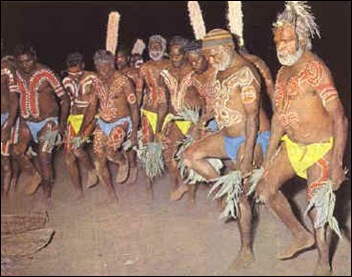
corroboreeaborigines  
Die geesten konden er uitzien als mensen, maar ook
als dieren of als andere dingen. Aan het einde van
de ‘droomtijd’ zonken ze terug in de aarde.
Op speciale ‘droomplaatsen’ houden de Aborigines
nu ceremonies. Zo’n corroboree, een godsdienstig ritueel,
gaat gepaard met zingen en dansen. De mensen geloven
dat ze dan weer contact hebben met de droomtijdgeesten.
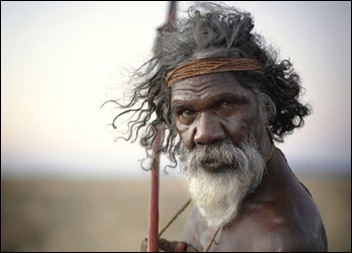
 aborigines

De mannen zijn zwaar behaard in hun gezicht en
op hun lichaam. De meeste Aborigines zijn donkerbruin,
maar als zij kleren gaan dragen, blijkt dat de huid onder
die kleren lichter wordt. Ook wordt hun huid soms bleker
na hun dood. Geen wonder dat de Aborigines doodsbang
waren, toen zij voor het eerst blanken zagen.
Zij beschouwden hen als wandelende lijken,
doden die opgestaan waren uit het graf. 
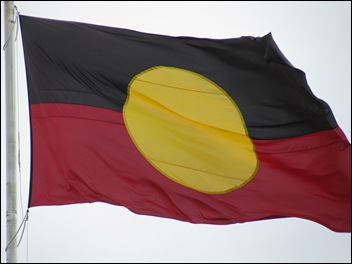
vlag 
De Aboriginals hebben ook een eigen vlag voor hun land.
Deze vlag is ontworpen door de Aboriginal Harold Thomas.
De oude vlag is aan de bovenkant zwart. Het zwart
symboliseert de Aboriginals en de onderkant is rood
en symboliseert de aarde. In het midden van de vlag
zie je een geel rondje die symboliseert de zon,
de bron van het leven.

http://www.dreamweb.nl/culture.htm

 Archaeologists believe that the Aborigines of Australia
were the first people to set foot on the continent,
somewhere between 40,000 and 60,000 years ago.

There are about 500 different Aboriginal peoples
in Australia, each with their own language and
territory and usually made up of a large
number of separate clans.

Aborigines themselves, however, trace their creation
back to the Dreamtime, the beginning of time,
when the spirits created the world.

During Dreamtime, spirits rose from below
the Earth and transformed into all the natural elements
you see in Australia today -- rivers, lakes, mountains,
hills and caves. The spirits literally make up the land.
The Aborigines see these spirits in much the same
way as Christians view God or Muslims view Allah.
However, the Aborigines believe that these spirits
are alive within the land of Australia.
Because of this, Aborigines view the land
as sacred and treat it as such.

”WHEN WE TAKE CARE OF THE LAND,
THE LAND WILL TAKE CARE OF US”

The dreamings, or stories, of the Dreamtime are
also considered sacred, and they're kept secret from
the outside world. Elders draw these stories in a series,
called a dreaming trail, using symbols.
Young men then learn what the symbols mean and
how to translate them so they can pass the history
along to the next generation. Many Aborigines
consider the dreamings to be the absolute truth
-- an unquestionable recording of history.

didgeridoo
boomerang 
Aborigines’ land was invaded from the end of
the 18th century onwards, with catastrophic
consequences for them.

Before the invasion, Aborigines lived throughout
Australia, although the highest population density
was along the coast. Here, people seem to have
moved seasonally between permanent settlements
near the sea and others at the headwaters of the coast rivers.

Evidence suggests that these communities
managed their environment carefully to ensure a steady
supply of food, bringing wild yams into gardens which
they irrigated, for example, or building artificial
dykes to extend the range of eels.

Those Aborigines who lived inland in the bush and
the desert lived by hunting and gathering, burning
the undergrowth to encourage the growth of plants
favoured by the game they hunted.
They were experts in seeking out water.

Today more than half of all Aborigines live in towns,
often on the outskirts in terrible conditions.
Many others work as labourers on cattle ranches
that have taken over their land.

Many, particularly in the northern half of the
continent, have managed to cling on to their land
and still hunt and gather ‘bush tucker’.


http://www.sino.net/australia-tourist-guides/history.html

WWW.australia_aboriginal_history/

http://my-facts-about-australia.blogspot.com/

Walkabout Aboriginal