24.7.09

~A Walk with Jane Austen~

miss-austen-regrets 
"...Flowers are very much worn, and fruit is still
more the thing. Elizabeth has a bunch of strawberries,
and I have seen grapes, cherries, plums, and apricots.
There are likewise almonds and raisins,
French plums, and tamarinds at the grocers’
but I have never seen any of them in hats."
Jane Austen 1799
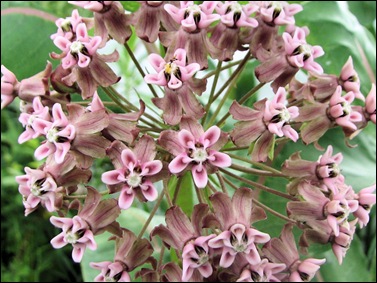
milkweed

Jane Austen loved a garden.  She took a keen interest
in flower gardening and kitchen gardening alike.
The Austens grew their own food whenever they could
and had flower gardens wherever they lived, at their
parsonage at Steventon in Hampshire, their town
gardens at Bath and Southampton, and when
they returned to Hampshire, at their cottage garden
at Chawton.  In Jane’s letters to her sister Cassandra,
we see her planning the details of these family gardens,
discussing the planting of fruit, flowers, and trees
with enthusiasm.  In the course of her life, she also
had the opportunity to visit many of the grander
gardens of England:  her brother’s two estates
at Chawton and Godmersham, the manor houses
of friends and family, and probably even the
great estate at Chatsworth, assumed by many
to be the inspiration for Pemberley…

So begins the book
“In the Garden with Jane Austen,” by Kim Wilson,
author of Tea with Jane Austen,
published by Jones Books [2008]

Main Residences

Steventon1775–1801: Steventon, Hampshire, U.K.
Steventon Rectory. The Rectory was demolished in 1820
but Steventon Church, where the Austens worshipped,
still remains. If you visit the field where the house
stood, you can see a metal pump (that replaced the
wooden pump from Austen's time) and a lime tree
that is thought to have been planted by Jane's eldest
brother James. Note that Jane spent some time away
from home during this time. In the Spring of 1783,
according to her family tradition, she and Cassandra
were sent to reside with tutor Mrs. Ann Crawley,
who lived in Oxford but moved to Southampton in
the Summer of that year. Around this time, Cassandra
and Jane both caught typhus; Jane nearly died.
Soon after, both girls returned to live at Steventon Rectory. Between the Spring of 1785 and December of 1786,
Jane and Cassandra attended Reading Ladies'
Boarding School in Berkshire.
view_of_bath_abbey
1801–1806: Bath, Somerset, U.K.
Her family moved several times whilst in Bath.
Their addresses were as follows: 4 Sydney Place, at the eastern end of Great Pulteney Street (until 1804);
3 Green Park Buildings East (1804–1805);
25 Gay Street (1805); and Trim Street
(1806, house number unknown).
 
1806–1809: Southampton, Hampshire, U.K.
Jane, Cassandra, their widowed mother
(Cassandra Leigh Austen), Francis Austen, and
Mary Austen (maiden name Gibson) all moved to
lodgings in Southampton (October 1806).
They then all moved to 3 Castle Square (March 1807).
This was described as a “commodious old-fashioned”
house and was rented from the Marquess of Lansdowne.
The house no longer exists because the whole Castle Square area has been redeveloped.
 
jane-austens-house 1809–1817: Chawton, Hampshire
Chawton Cottage. This is now open to the public as the Jane Austen's House Museum.
last-house-winchester

1817: Winchester, Hampshire, U.K.

8 College Street. Jane and Cassandra moved here in
order for Jane to receive medical attention.
Although the house is still standing, it is a private house
that is not open to the public. A commemorative plaque
above the front door reads “In this house Jane Austen
lived her last days and died 18th July 1817”.

plaque on her last home Jane’s last poem written July 15th:
When Winchester Races.

When Winchester races first took their beginning
It is said the good people forgot their old Saint
Not applying at all for the leave of Saint Swithin
And that William of Wykeham’s approval was faint.

The races however were fixed and determined
The company came and the Weather was charming
The Lords and the Ladies were satine’d and ermined
And nobody saw any future alarming.–

But when the old Saint was informed of these doings
He made but one Spring from his Shrine to the Roof
Of the Palace which now lies so sadly in ruins
And then he addressed them all standing aloof.

‘Oh! subjects rebellious! Oh Venta depraved
When once we are buried you think we are gone
But behold me immortal! By vice you’re enslaved
You have sinned and must suffer, ten farther he said

These races and revels and dissolute measures
With which you’re debasing a neighboring Plain
Let them stand–You shall meet with your curse in your pleasures
Set off for your course, I’ll pursue with my rain.

Ye cannot but know my command o’er July
Henceforward I’ll triumph in shewing my powers
Shift your race as you will it shall never be dry
The curse upon Venta is July in showers–’.


Keira strutting through a fieldKiera and groombridge

22.7.09

~My Childhood Garden~

Jane Austen House GardenMy childhood garden
lush and green
it was so happy it made me scream
my joy and hopes
and all my mopes
my childhood garden.

My childhood garden
with the ups and downs
when I jumped I could not touch the ground
with my purle ponys
it made it homey
My childhood garden.

My childhood garden
flying high
with the little lies
the grass fine
up in the sky my kite
my childhood garden.

My childhood garden
now in the past
I now know that it can never last
now as I get taller
it was differnt when I was smaller
my childhood garden.

by Danielle Eager

21.7.09

~My dreamcottage?

vandyked yellowWhen you pretend this is me?
How should my house & my garden look like ? 

Stel je voor..Dit ben ik…
Waar zou ik dan wonen, en hoe zou mijn tuin eruit zien?

mijn foto

mijn foto

With a Beautiful Cottage garden?
Met een prachtige Cottage tuin?

mijn fototuinhek

“Home is the nicest word there is”
~Laura Ingalls Wilder~

penberth_thatched_cottageBrittany Thatched Cottagebeach-house

Or Maybe A little house with an oceanvieuw?
Of misschien toch een klein huisje met uitkijk over zee?

A Girl can dream, Can’t she?

20.7.09

~Hortensia~

 Hortensia (Hydrangea) is een geslacht bloeiende
planten uit de hortensiafamilie (Hydrangeaceae).
Er zijn ongeveer 100 soorten verspreid over de hele wereld,
waarvan sommige in het wild voorkomen.
Vooral in China en Japan komen hortensia's veel voor.

Hortensia is een gevarieerd geslacht planten: er zijn
bladverliezende en groenblijvende soorten
en zelfs soorten die klimmen. 

Hydrangea common names Hydrangea and Hortensia
is a genus of about 100 species of flowering plants
native to southern and eastern
Asia. By far the
greatest species diversity is in eastern Asia, notably China,
Korea, and Japan. Most are
shrubs 1-3 m tall, but some are
small trees, and others
lianas reaching up to 30 m
by climbing up trees. They can be either
deciduous or
evergreen, though the widely cultivated temperate
species are all deciduous.

There are two flower arrangements in hydrangeas.
Mophead flowers are large round flowerheads resembling
pom-poms or, as the name implies, the head of a mop.
In contrast, lacecap flowers bear round, flat flowerheads
with a center core of subdued, fertile flowers surrounded
by outer rings of showy, sterile flowers.
 

De plant heeft een merkwaardige
bloeiwijze. Er zijn grote, pluimvormige trossen
of schermen, bezet met vele bloemen.
De middelste daarvan zijn klein en vruchtbaar.
Deze kunnen zaad leveren. De bloemen aan
de buitenkant zijn groter, maar steriel.

De populaire blauwe variant van Hydrangea macrophylla
verkleurt tot grauw rozeblauw als de grond niet zuur
en ijzerhoudend is. Daarom is het voor de kweek
van deze variant aan te raden zuurhoudende grond te gebruiken, evenals (kali)aluin of aluminiumsulfaat toe te dienen.
Andere variëteiten, zoals de roze versie van
Hydrangea macrophylla, hebben juist het omgekeerde nodig.

Hydrangea flowers are produced from early spring to
late autumn; they grow in flowerheads (corymbs or panicles)
at the ends of the stems. In many species,
the flowerheads contain two types of flowers, small
fertile flowers in the middle of the flowerhead, and large,
sterile bract-like flowers in a ring around the edge
of each flowerhead. Other species have all the
flowers fertile and of the same size.

In the species H. macrophylla, can be blue, red, pink,
light purple, or dark purple. In these species the exact
colour often mirrors the pH of the soil; acidic soils
produce blue flowers, neutral soils produce very pale
cream petals, and alkaline soils results in pink or purple.
This is the caused by a color change of the flower pigments
in the presence of aluminium ions which can be
taken up into hyperaccumulating plants.

De taak van de grote buitenbloemen is insecten ertoe
te verleiden een bezoek aan de plant te brengen,
om zo het stuifmeel op de binnenste bloemen af te geven.

19.7.09

~Sweet Love~

bee

It takes 4,000 flower visits to make 1 tablespoon of honey. 
To make one pound of honey, workers in
a hive fly 55,000 miles and tap two million flowers. 
In a single collecting trip, a worker will visit
between 50 and 100 flowers.

Ze leggen 4000 visites af om 1 theelepel honing te produceren.
Om 500gram honing te maken vliegen de ‘werkers’
ong. 88.515 km en tappen af bij zo’n
2 miljoen bloemen, in 1 ronde heeft de ‘werker’
ong. 50 tot 100 bloemen bezocht!

17.7.09

~Lavendel~

Buddlejas & Lavender 
The Lavenders Lavandula are a genus of 39 species
of flowering plants in the mint family, Lamiaceae,
native to the Mediterranean region south to tropical Africa
and to the southeast regions of India. The genus includes annuals, herbaceous plants, subshrubs, and small shrubs.

De groeiplaats voor Lavendel is een zonnige en
open plaats. De beste grond voor Lavendel is
goed gedraineerd, zanderig met leem.
Lavendel kan vermeerderd worden door zaaien en
stekken.Voor stekken neemt men in de lente of
de herfst 10 tot 20 cm lange stekken van de stengel.
De plant kan ook gesplitst worden.
Voor zaaien, zaait u het zaad van februari tot april
onder glas. De kiemduur is ongeveer 4 weken.
Uitplanten kan vanaf half mei op 45 tot 60 cm van
elkaar of voor heggen 30 cm afstand van elkaar.
Verwijder afgestorven bloemstelen en snoei de heggen en achterblijvende planten in de late herfst of lente.
Om te oogsten plukt u de bloemstelen wanneer de
bloemen net open zijn. Pluk de bladeren indien het nodig is.
Droog de bloemen door ze in bosjes op te hangen.

lavender Drying

Lavender is a pale tint of violet. It applies particularly
to the color of the flower of the same name.
The term lavender may also be used in general to
apply to a wide range of pale, light, medium, or
grayish violet colors, as well as some pale or light pinkish,
magenta, or purple colors as well as some pale or
light blueish-indigo colors. The color lavender is
made by mixing violet and white paint.

The first recorded use of the word lavender
as a color term in English was in 1705.

lavender-harvest lavender-harvest

The Song of the Lavender Fairy by Cicely Mary Barker!

lavender fairy

"Lavender's blue, diddle diddle"- So goes the song;
All around her bush, diddle diddle, Butterflies throng;
(They love her well, diddle diddle, So do the bees;)
While she herself, diddle diddle, Sways in the breeze!

"Lavender's blue, diddle diddle, Lavender's green;"
She'll scent the clothes, diddle diddle, Put away clean- Clean from the wash, diddle diddle, Hanky and sheet; Lavender's spikes,
diddle diddle,
Make them all sweet!

The Winning Product Line Lavender
Gebruik de hele plant voor mooie geurige hagen.
Hang de gedroogde bloem op in bosjes, apart
of samen met andere bloemetjes. 
Vooral Lavendel ziet er leuk uit aan het hoofdeinde
van het bed, aan de gordijnrails of aan een fotolijstje.
Lavendel met andere bloemen is leuk op deuren,
aan raamkozijnen of aan het plafond.
Voeg twijgjes toe aan kransen en ruikers.
Zijn de lavendelbloemen uitgedroogd, dan kunnen
ze nog voor andere doeleinde gebruikt worden.

 Sussex

Lavendel (Lavandula) is een geslacht uit de
lipbloemenfamilie (Lamiaceae). Het geslacht is terug
te vinden in veel tuinen omwille van de paarse kleur
en de geur van de bloemen.

Lavendel wordt ook gekweekt om de lavendelolie
die geëxtraheerd kan worden uit de paarse bloemen.
Deze olie wordt als geurstof gebruikt in cosmetica, zoals zeep
en parfum. Daarnaast wordt lavendelolie bijvoorbeeld
gebruikt in de aromatherapie. Ook kunnen lavendelkorrels
in zakjes in kledingkasten worden gelegd om motten te weren.

Vooral de Provence staat bekend om de lavendelteelt.
Meestal gaat het om kruisingen met een hoge
concentratie aan etherische oliën zoals de veel
aangeplante cultivar Lavandula ×intermedia 'Grosso'.
In Nederland en België komt lavendel niet van nature voor.

Lavandula x intermedia
stoechas_Lace

Franse lavendel (Lavandula stoechas), ook wel
kuiflavendel of vlinderlavendel genoemd, is een plant
uit de lipbloemenfamilie (Labiatae of Lamiaceae).
Het is een sterk vertakte en opvallend geurende heester.
De soort komt voor in het Middellandse Zeegebied
op droge, steenachtige rots hellingen.
Vaak zijn ze in gezelschap van kurkeiken.

De hoogte is circa 1 m. De bladeren zijn grijsachtig groen en fluweelzacht. Ze zijn lijnvormig en worden maximaal 4 cm lang.

De bloemen lijken op die van de spijklavendel.
Ze vormen langwerpige aren met aan de top enkele
purperkleurige schutbladen. De vliezige schutbladen
zitten onder de bloempjes.

Lavandula angustifolia 
English lavender, Lavandula angustifolia, yields an
essential oil with sweet overtones, and can be used in
balms, salves, perfumes, cosmetics, and topical applications. Lavandin, Lavandula x intermedia
(also known as French lavender), yields a similar
essential oil, but with higher levels of terpenes 
including camphor, which add a sharper overtone
to the fragrance. Spanish lavender, Lavandula stoechas
is not used medicinally, but mainly for landscaping.

growing lavenderJune 
When your lavender has blossomed, the flowers can
be picked for many uses. If you desire a fresh bouquet,
pick the blossoms when half of the flowers on the blossom
head have opened. If you are picking to dry the bundle
for crafting or sachet, pick when 3/4's to
all of the blossoms are open.

Hidcote White 
http://www.Discoverhowtomakelavendersugar.htm

http://www.natuurlijkerwijs.com/lavendel.htm

Lavender smells good!!!

Enjoy your lavender;
it captures the essence of summer and
is truly the sweetest of herbs.

14.7.09

~Stoomtram Hoorn-Medemblik~

DSCF0040

The engine whistles and the fireman puts coal
onto the fire. Wooden partitions creak,
wheels sing and steam hisses. From the wooden
or cushioned seats in your carriage you will experience
a story from a different era. Between the historic
“Zuiderzee” towns of Hoorn , Medemblik and
Enkhuizen steamtrams meander from village to village
across the Westfrisian countryside
Pay a visit to the Museum Steamtram and get on board
for one of the most thrilling journeys through time.
This is the registered museum focusing on the history
of the steamtramways in Holland.

The Museumstoomtram Hoorn-Medemblik is the
officially registered museum that highlights the history
of the steam tram in the Netherlands between
1879 and 1966. To this end, the Steam Tram
Museum acquires, restores and manages a collection
which reflects this history. This collection forms the
basis of a presentation that is both historically accurate
and attractive to tourists. The era portrayed in the
presentation is based around the year 1926.

Throughout the year the Museum Steamtram
Hoorn-Medemblik offers many possibilities to enjoy
the most thrilling journey through time by steamtram
and boat between the historic Westfrisian towns
of Hoorn, Medemblik and Enkhuizen.


De locomotief fluit en de stoker gooit kolen op het vuur!
Wielen zingen en stoom sist. Vanaf de houten
banken of het zachte pluche in de tram hoort en
ziet u een verhaal uit een andere tijd. Tussen de
historische Zuiderzeesteden Hoorn en Medemblik
rijden de stoomtrams over het Westfriese platteland.


De Museumstoomtram Hoorn -Medemblik is het
officieel geregistreerde Museum dat de geschiedenis
van de stoomtram in Nederland en de rol die het
plattelands-railvervoer in de Ontwikkeling van ons land
tussen 1879 en 1966 heeft gespeeld, belicht.
De Museumstoomtram verwerft, restaureert en beheert
daartoe een collectie die in haar geheel dit beeld
vertegenwoordigt. Deze collectie, met Authentiek
Nederlands stoomtrammaterieel, de lokaalspoorlijn
Hoorn -Medemblik met de gebouwen, seininrichtingen,
voorwerpen en archiefmateriaal, vormt de basis voor
een historisch verantwoorde en toeristisch
attractieve presentatie. In deze presentatie wordt
het tijdsbeeld anno 1926 als leidraad gebruikt.


In dit Museum worden de onderdelen van de collectie
niet alleen getoond, maar ook nog frequent gebruikt
voor hun oorspronkelijke doel. Informatie over de roerende museumstukken vind je in het hoofdstuk Werkplaats.
In het hoofdstuk Seinhuis vind je informatie over het
seinwezen, de Lijn en over de stationsgebouwen.
De Museumstoomtram beperkt zich niet tot het
behouden van materieel. Ook de geschiedenis van
het Vervoer per stoomtram krijgt aandacht in
het Stoomtram Documentatie Centrum.
  

De werkplek van de treindienstleider bij de SHM.
Het betreft het ongeveer 100 jaar oude seinhuis van Kesteren,
dat in 1984 door medewerkers van de SHM voorzichtig
is gesloopt en enkele jaren later herbouwd
op het tramstation in Hoorn.
Het seintoestel is van het "Alkmaarse" HSM-type en
is ongeveer 90 jaar oud. De vrijwilligers hebben
een ware prestatie geleverd door het aanpassen
aan de Hoornse situatie. Alle klassieke seinen,
de wissels 5 en 9 en de overweg worden hier vandaan bediend, inclusief de afhankelijkheden zoals flankbeveiliging.

DSCF0045

DSCF0075

De Museumstoomtram Hoorn Medemblik (SHM) voert
met historisch stoomtrammaterieel een dienst uit
tussen Hoorn en Medemblik, op de lijn die destijds
gebruikt werd door de Locaalspoorwegmaatschappij
Hollands Noorderkwartier.

kelly 
Het museum maakt gebruik van het voormalige
goederen- en rangeeremplacement van station Hoorn.
De eerste ritten met museummaterieel werden
hier op 23 mei 1968 gemaakt.
Hiervoor werd gebruik gemaakt van de
loc's 18 en 30 met NS-Blokkendoosrijtuigen.
Ter gelegenheid van het veertigjarig jubileum werden
op 1 mei 2008 deze ritten met dezelfde
materieelsamenstelling herhaald.

In de daarop volgende jaren ontwikkelde zich het
stoomtrambedrijf zoals we dat nu kennen.
De stoomtramverbinding is onderdeel van de
'Historische Driehoek', een dagtocht die men kan maken
tussen de Westfriese steden Hoorn, Medemblik en Enkhuizen, waarbij op de vaarroute Medemblik – Enkhuizen het
MS Friesland wordt ingezet en voor de derde zijde
van de driehoek gebruik gemaakt wordt van de NS-treindienst.

vanuit de coupe

Het stoomtrambedrijf herinnert aan de vele
stoomtrambedrijven zoals die tussen 1879 en 1966
in Nederland bestonden. Als leidraad voor de
stoomtram wordt het jaar 1926 aangehouden.

http://www.museumstoomtram.nl/

  De foto’s zijn door mij gemaakt
toen wij in Aug. 2006 een ritje met deze prachtige
stoomtram hebben gemaakt!